The short answer
Yes, you can easily visit the Douro Valley by train from Porto, and for travellers without a car it is one of the best ways to reach the region.
For most first-time visitors, we recommend taking the train to Pinhão rather than stopping in Peso da Régua. The journey takes roughly 2 hours 20 minutes, and Pinhão makes it easy to combine the train ride with lunch, a wine tasting and a short boat trip.
Peso da Régua is closer, at roughly 1 hour 55 minutes from Porto, and is a better choice if you want to visit the Douro Museum or have arranged transport to a winery elsewhere in the region.
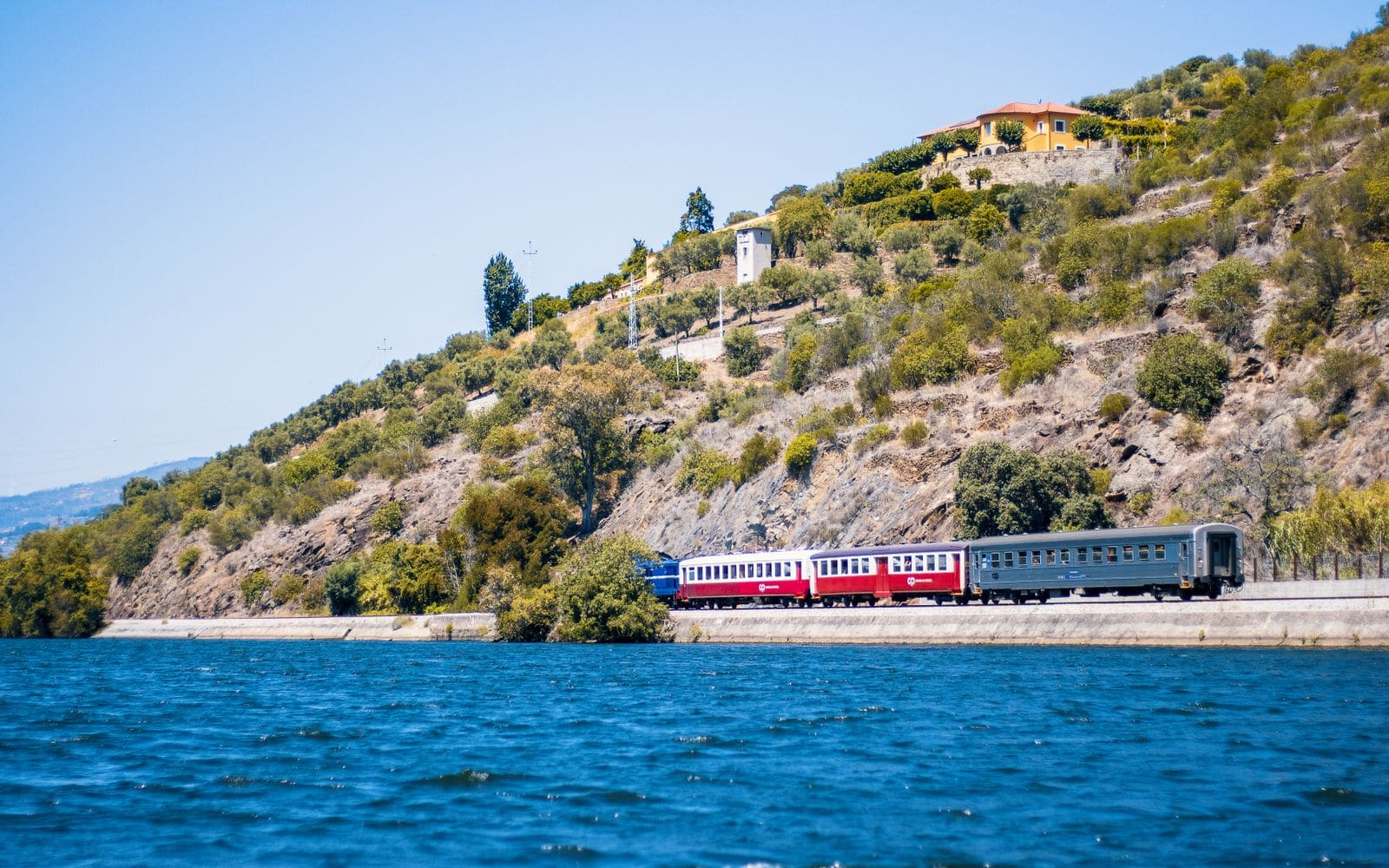
The most scenic part of the railway comes after Régua. The line follows the Douro more closely through the vineyards.
Check the latest timetable with CP before travelling, as not every service runs to every station.
Quick comparison
Porto to Douro Valley train: quick guide
| Option | Typical time | Best for |
|---|---|---|
| Peso da Régua | About 1h55 | Museum, services and onward transfers |
| Pinhão | About 2h20 | First visits, wineries and boat trips |
| Tua | About 2h35 | Scenery and a quieter stop |
| Pocinho | About 3h20 | The full scenic rail journey |
Times vary by service. Check your exact departure and return trains with CP before booking other parts of the day.
Where does the Douro Valley train leave from in Porto?
Douro Line services can leave from Porto São Bento or Porto Campanhã, depending on the train.
São Bento is usually more convenient if you are staying in Porto's historic centre.
Campanhã is Porto's main long-distance railway station and is easy to reach by train or metro from other parts of the city.
Do not assume that every Douro train starts at São Bento. Check the departure station shown for your specific service when booking.
The official CP timetable currently includes services from both São Bento and Campanhã towards Régua and stations farther along the Douro Line.
Is there a direct train from Porto to Pinhão?
Yes, there are direct services from Porto to Pinhão, but not every train on the Douro Line continues that far.
Some services terminate earlier, particularly around Marco de Canaveses or Régua, while others continue through Pinhão towards Tua and Pocinho.
This is why searching specifically for Porto to Pinhão on the CP website or app is better than simply arriving at the station and boarding the next eastbound train.
When planning a day trip, also check the return journey before leaving Porto.
How long is the train from Porto to the Douro Valley?
Exact times vary by service.
The first hour of the journey mainly crosses Porto's suburbs and inland towns. The scenery becomes more interesting as you approach the Douro, and improves substantially after Régua.
If scenery is one of the main reasons you are taking the train, do not get off too early.
- Porto to Peso da Régua: around 1h55
- Porto to Pinhão: around 2h20
- Porto to Pocinho: around 3h20
Pinhão or Régua: which stop should you choose?
For most visitors, Pinhão is the better stop.
Get off at Pinhão if you want
Pinhão station itself is also worth seeing for its famous azulejo panels depicting traditional scenes of wine production and the Douro landscape.
- Classic Douro Valley scenery
- A compact town that is easy to explore on foot
- A short Douro boat trip
- Restaurants near the river
- Wine tastings close to town
- An easy first day trip without a car
Get off at Peso da Régua if you want
Régua is a larger town and an important regional transport hub, but it does not offer the same compact vineyard-and-river experience as Pinhão.
- The Douro Museum
- More shops and everyday services
- Easier road connections
- A booked transfer to a winery
- Time around Régua or Lamego
What is the most scenic part of the Douro train journey?
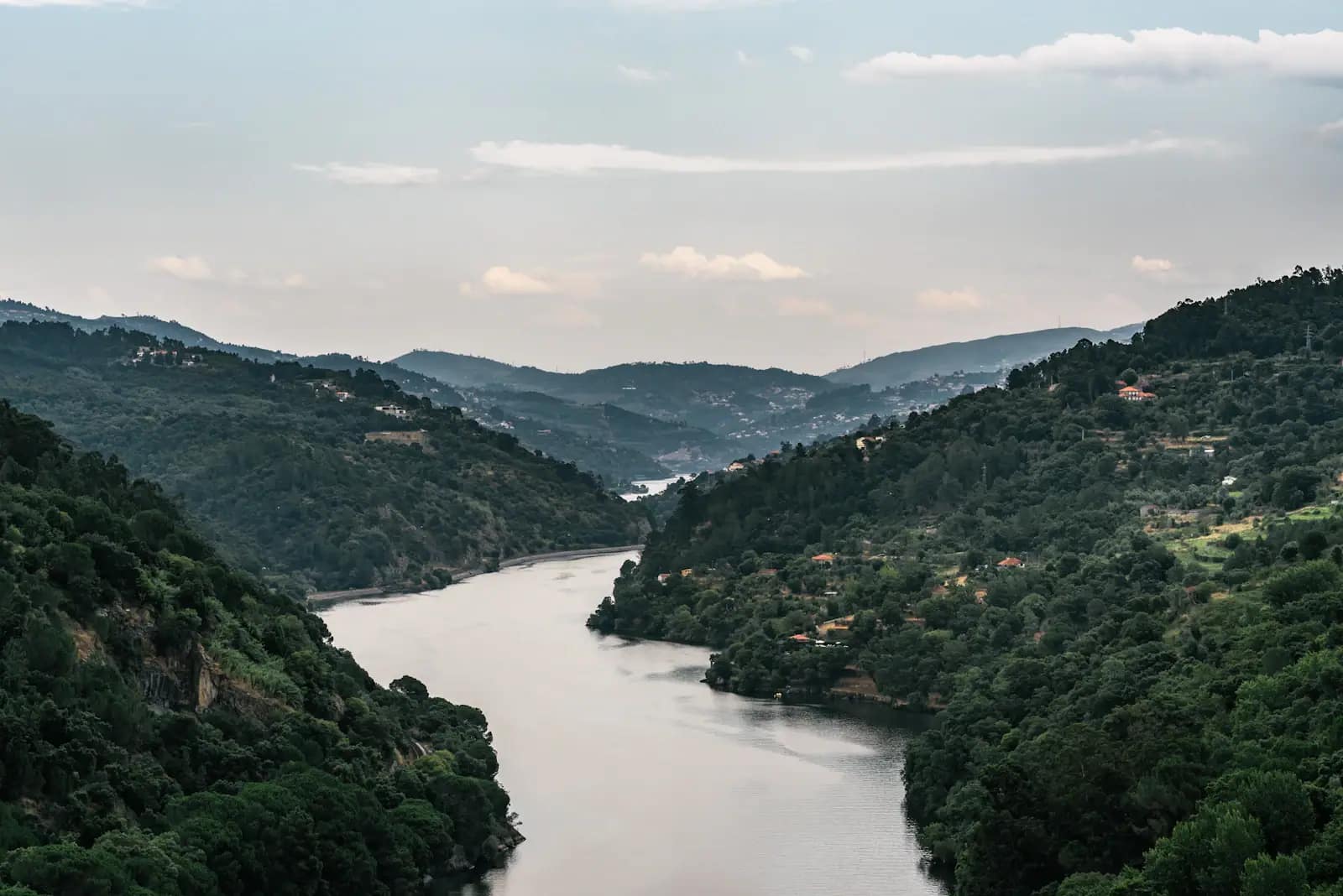
The scenery improves considerably once the train reaches the Douro River.
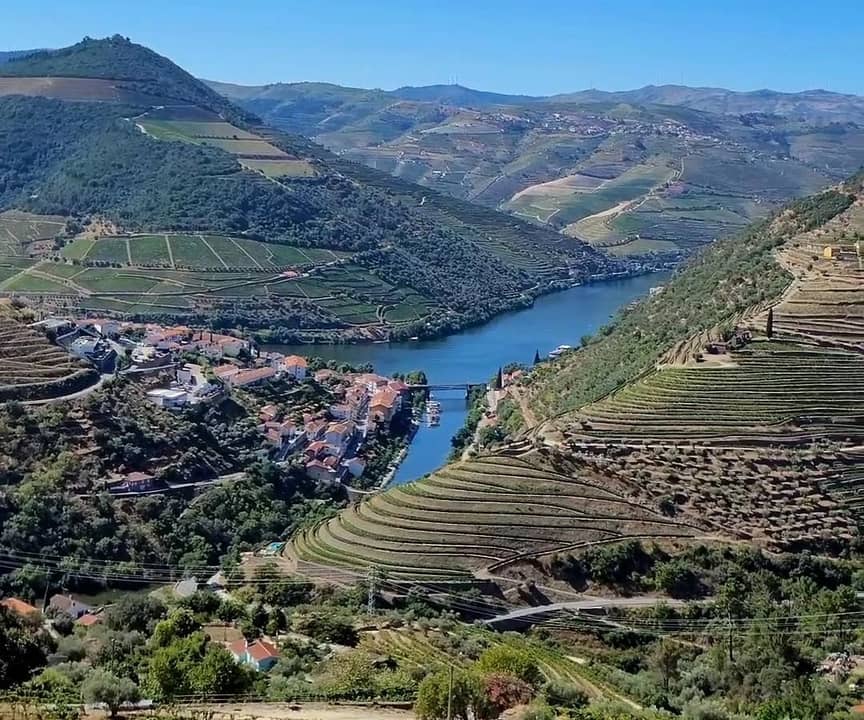
The section between Régua and Pinhão is particularly beautiful, with the railway running close to the water beneath steep vineyard terraces.
But the railway does not stop being scenic at Pinhão.
The stretch between Pinhão, Tua and Pocinho is also scenic and feels increasingly remote as the train continues east.
For a normal day trip, however, continuing all the way to Pocinho comes with a trade-off: you spend much more of the day sitting on the train and have less time for wineries, lunch or a boat trip.
Which side of the train has the best views?
When travelling from Porto towards the Douro Valley, sitting on the right-hand side is generally the best choice for river views once the railway reaches the Douro.
The river changes position relative to the railway in places, so no seat provides uninterrupted views for the entire journey.
There is no need to worry too much about the seating choice. The scenery is visible from both sides at different points.
On the return journey to Porto, the opposite side will naturally have many of the better views.
How much does the Douro train cost?
The train is one of the cheapest ways to visit the Douro Valley independently.
Current CP fares for the Porto to Douro Regional and InterRegional services are relatively inexpensive compared with renting a car or joining a tour.
CP's 2026 fare table lists one-way Porto to Régua fares at about 9,30€ to 10,25€, depending on the service. The listed InterRegional fare to Pinhão is 11,80€.
Fares can change, and discounts may apply depending on the passenger and ticket type, so check the current price directly on the CP website before travelling.
Where should you buy train tickets?
Use official CP channels: the CP website, CP mobile app, station ticket offices or CP ticket machines where available.
For a day trip, we recommend checking both your outward and return trains before making winery or boat reservations.
During busy periods, buying in advance also removes one thing to organise on the morning of your trip.
A good Douro Valley train day trip from Porto
The easiest independent day is built around Pinhão.
Most importantly, know which return service you plan to use before starting your day. Services are not frequent enough to treat the Douro Line like an urban metro system. Missing a train can mean a significant wait.
Morning: Porto to Pinhão
Leave Porto in the morning and take the train directly to Pinhão.
Avoid arriving too late. You need enough time for lunch and at least one activity before your return train.
Late morning: explore Pinhão
Start around the railway station and riverfront.
Pinhão itself is small, so you do not need much time simply to walk around town.
Lunch
Book lunch in Pinhão or at a nearby wine estate.
There are several good options around town.
Afternoon: choose one main activity
For a relaxed day, choose one main activity. A winery plus a short cruise can work if the timings are comfortable.
- A winery visit and tasting
- A one- or two-hour boat trip
Evening: Pinhão to Porto
Return to Pinhão station with plenty of time before your train.
Can you visit wineries from Pinhão without a car?
Yes, but your options are more limited than they would be with a car or driver.
A few wine experiences are relatively close to Pinhão, including estates around the town and river.
However, one of the biggest mistakes visitors make is looking at the distance on Google Maps and assuming every quinta nearby is comfortably walkable.
Douro roads can be steep, narrow and without pavements, and a short distance on the map may not make for a pleasant walk.
If the winery is outside central Pinhão, ask the estate how they recommend getting there. A taxi or pre-arranged transfer can be worth it.
Can you combine the train with a Douro boat trip?
Yes, and this is one of the best ways to spend an independent day in the Douro.
Several cruises depart from the riverfront in Pinhão, only a short walk from the railway station.
A one-hour cruise is easy to fit into most itineraries. A two-hour cruise can also work, but requires more careful planning if you also have a winery reservation.
This is very different from taking a full-day Douro cruise from Porto, which spends most of the day travelling along the river.
For a train day trip, we prefer Porto to Pinhão by train, a short boat trip, a winery or lunch, and the train back to Porto, rather than spending the entire day travelling by boat from Porto.
Should you continue to Pocinho?
Only if the train journey itself is the main attraction.
Pocinho is the eastern terminus of the current passenger railway.
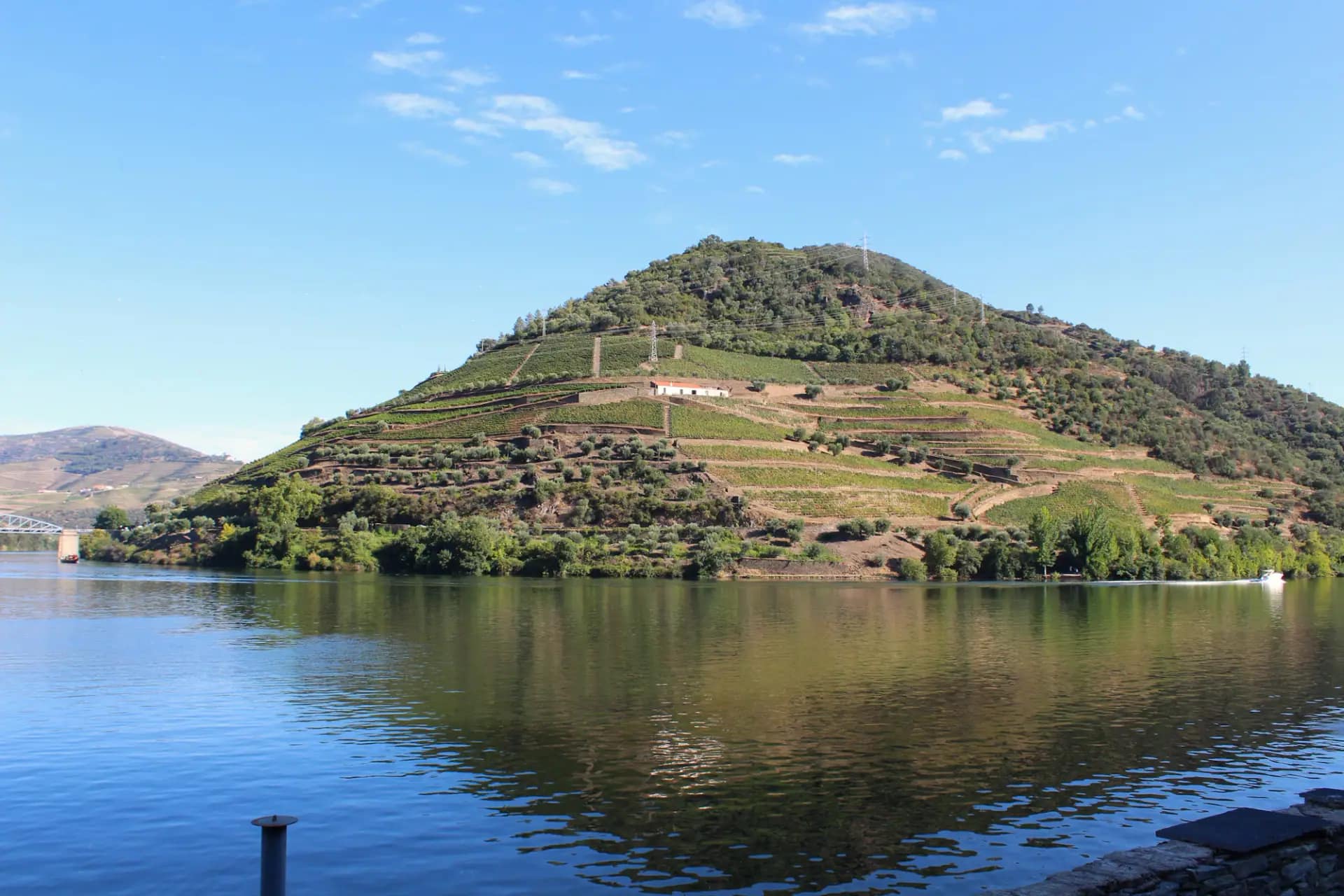
The section beyond Pinhão is beautiful, passing Tua and increasingly remote stretches of the Douro before reaching Pocinho.
But Pocinho has much less to offer a first-time visitor than Pinhão.
If you have only one day and want wineries, food and a boat trip, get off at Pinhão.
If you love rail journeys and mainly want to see as much Douro scenery as possible, continuing to Pocinho can be worthwhile.
What the train cannot do
The train is excellent for seeing the river corridor, but it does not give you easy access to the whole Douro Valley.
Many of the region's wineries, viewpoints, wine hotels, restaurants and small villages are located high above the river or away from railway stations.
A train trip therefore gives you an excellent introduction to the Douro, but not complete freedom to explore it.
If you want to visit several remote estates or viewpoints in one day, a Douro Valley tour or car is usually more practical.
Train or guided tour?
For many independent travellers, the best compromise is the train to Pinhão plus one pre-booked wine experience or boat trip.
You get the scenic railway journey without trying to organise too much.
- Choose the train for a cheaper trip, independence, the scenic railway journey, a relaxed day around Pinhão and no driving
- Choose a guided tour for several winery visits, door-to-door transport, organised lunch and more of the valley in one day
Is the Douro Valley train worth it?
Yes, particularly if you are travelling without a car.
It is inexpensive, scenic and takes you directly into one of the most attractive parts of the Douro Valley.
But go with the right expectations.
The train is best for a day centred around Pinhão and the river, not for visiting four remote wineries and several viewpoints.
If that sounds like the type of Douro day you want, the train is one of the best options from Porto.
Practical tips before you go
A few things make the trip much easier.
CP also advises passengers who require assistance or step-free access to check accessibility in advance, as facilities vary between trains and stations.
- Check the official CP timetable for your exact date
- Confirm whether you depart from São Bento or Campanhã
- Check the last convenient return train before leaving Porto
- Reserve winery visits in advance
- Leave time between the train and any tasting reservation
- Bring water, particularly in summer
- Do not expect restaurant-style catering on Regional services
- Arrange transfers in advance for remote wineries
Frequently asked questions
Is there a train from Porto to the Douro Valley?
Yes. The Douro Line runs east from Porto through Peso da Régua, Pinhão, Tua and Pocinho.
Is there a direct train from Porto to Pinhão?
Yes, several services run directly from Porto to Pinhão, but not every Douro Line train travels that far. Check the exact service with CP.
How long is the train from Porto to Pinhão?
The journey usually takes about 2 hours 20 minutes, depending on the service.
How long is Porto to Régua by train?
Allow about 1 hour 55 minutes, depending on the train.
Which station is best for visiting the Douro Valley?
Pinhão is usually best for a first trip without a car because the riverfront, boat departures, restaurants and some wine experiences are nearby.
Is the train from Porto to the Douro Valley scenic?
Yes. The best-known river views begin around Régua and continue through Pinhão towards Tua and Pocinho.
Can you visit the Douro Valley by train in one day?
Yes. Porto to Pinhão works well as a full-day trip if you leave in the morning and check your return train in advance.
Can you visit wineries by train?
The train reaches Pinhão and Régua, but it does not serve most wineries directly. Some wine experiences are close to Pinhão, while others need a taxi or transfer.
Our pick
Book a Douro Valley experience
 1 / 3
1 / 3From Porto: Douro Valley with Boat Tour, Wine Tasting & Lunch
Wine experience. Duration: 7–10 hours. Departure: Porto.
Price checked on 3 September 2026. Confirm the live total for your date.
Fresh from the valley